

Treated Timber Cladding: How to Choose the Right Profile and Finish
Treated timber cladding is softwood, usually redwood or spruce, that has been pressure-impregnated with preservative so it can face the weather without rotting or being attacked by insects. For boards used on the outside of a building above ground, the relevant treatment standard is Use Class 3, so it is worth checking that “treated” means treated for that purpose.
Most buyers settle the treated-or-untreated question quickly. The harder decisions are which profile suits the building, how the boards should be fixed and how they will look after a few winters. This guide covers those points for garden rooms, sheds, workshops and similar outbuildings.
What pressure treatment does, and what it doesn’t
Pressure treatment drives a water-based preservative into the timber under vacuum and pressure. It protects against fungal decay and insect attack, which are the main reasons untreated softwood fails outdoors in the UK. The redwood boards in CMR’s treated cladding range are Scandinavian redwood treated with Tanalith® preservative.
Treatment doesn’t stop timber behaving like timber. Boards still take on and release moisture, so they move slightly with the seasons, and they still weather. Expect some colour change and the occasional small surface check over time, which is usually cosmetic. If you want a closer look at the lifespan factors, our guide to how long pressure-treated timber lasts covers them.
Comparing the main profiles
| Profile | Look | Worth knowing |
| Loglap | Curved face, traditional log-cabin appearance | Tongue and groove. CMR’s board is 20 x 95mm, listed in 3.6m, 4.2m and 4.8m lengths |
| Shadow gap | Flat boards with a deliberate groove between them, giving crisp shadow lines | Tongue and groove. CMR’s board is 95 x 28mm in 2.55m lengths, available Tanalised, Tanatone or untreated |
| Shiplap | Flat face with a modest shadow line at each overlap | A rebated edge. It suits both traditional and plainer finishes |
Loglap suits buildings that want a traditional feel. Shadow gap gives a more contemporary, architectural look and is a common choice for garden rooms and home offices. Shiplap sits between the two, plain and versatile. If you are undecided, a sample board held against the building’s other materials usually settles it faster than a spec sheet.
Horizontal or vertical?
Vertical boards let water run straight down the face and along the grain, which makes them forgiving on exposed walls. CMR also lists a vertical square-edge shiplap for this. They need horizontal rails or battens behind them, so check the cavity still lets air and water escape.
Horizontal tongue-and-groove boards are normally fitted with the groove facing down, so water sheds rather than collects. Follow the fixing guidance for the profile you choose.
The details that decide how long cladding looks good
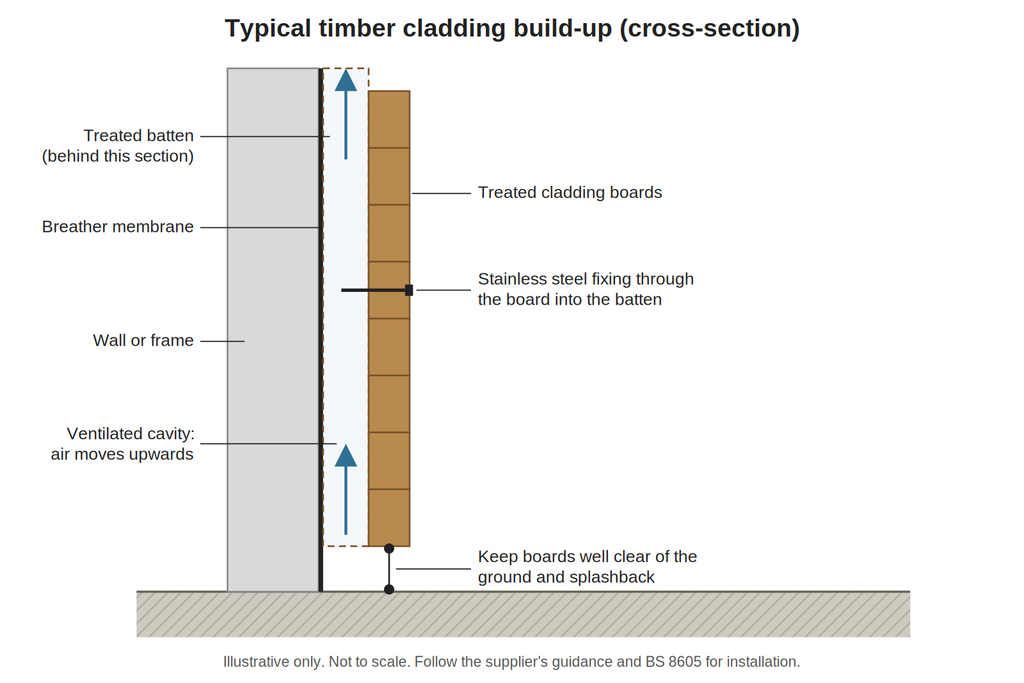
Battens and ventilation. Fix boards to treated battens rather than directly to the wall or frame, leaving a ventilated gap behind so moisture can escape. BS 8605 covers specifying and installing external timber cladding.
Fixings. Stainless steel is the safe choice for external cladding. Plain steel can corrode and stain the boards. Check the specification of anything you buy from the fixings range before it goes on a wall.
Cut ends. Every cut, notch or drilled hole exposes untreated timber. Preservative manufacturers advise treating cut faces with a suitable end-grain preservative.
Ground clearance. Keep the bottom edge well clear of the ground and of splashback from paths or planting. Use corner trim at external corners rather than leaving end grain exposed.
Colour: Tanalised, Tanatone and ageing
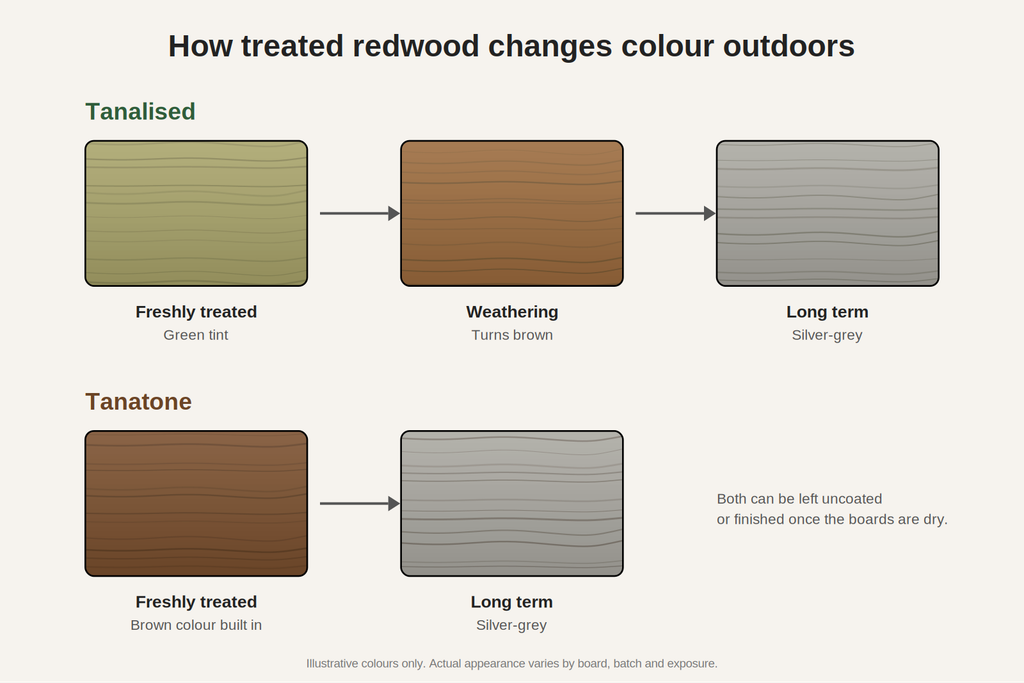
Tanalised timber starts with a green tint that weathers to brown and, over the long term, to silver-grey. Tanatone has a brown colour built into the treatment, so it skips the green stage. CMR’s loglap is available in Tanalised and Tanatone, and shadow gap in Tanalised, Tanatone and untreated.
Treated cladding doesn’t need a coating to protect it from decay. If you want a stain or paint, let the boards dry first and follow the coating manufacturer’s instructions. If you like silver-grey, leave them alone.
Choosing and ordering
Measure the wall area, add an allowance for waste, corners and trim, and compare profiles in person before committing. You can order samples, and the team on 0113 345 1617 (Monday to Friday, 7am to 5pm) can talk through a project. Orders can be collected from our Hunslet site in Leeds or sent by UK delivery.